Why Long and Heavy Parts Need a Different Bending Setup
Bending a small bracket and bending a 4 meter door panel are not the same job. Once the part becomes long, heavy, or both, the buyer has to think beyond basic tonnage. Machine rigidity, workpiece support, bed deflection compensation, and loading safety all become part of the purchasing decision.
This is where many overseas buyers make a costly mistake. They choose a press brake based only on thickness and nominal tonnage, then discover angle inconsistency across the full bend length, sheet sagging during positioning, or poor repeatability on large panels. A machine that works well for short parts may struggle when the workpiece is long enough to flex under its own weight.
If your factory makes long cabinet panels, elevator door parts, structural covers, distribution box doors, trailer components, or large stainless steel cladding parts, you need to evaluate the full bending setup, not only the main frame.
The Main Problems in Long and Heavy Workpiece Bending
1. Deflection Across the Full Bending Length
On long bends, the press brake bed and ram can deflect under load. Even a small amount of deflection changes the bend angle from the center to the edge. The result is a part that looks acceptable in the middle but opens or closes at the ends.
That is why crowning or compensation matters so much on large-format bending jobs. Without it, your operator may keep adjusting pressure and still fail to get a consistent angle across the full length.
2. Workpiece Sagging During Positioning
When the sheet is large, the material itself becomes part of the problem. The operator has to support more weight during loading and positioning. If the panel sags before the bend starts, the backgauge reading can be correct while the actual bend position is still wrong.
This is especially common in long stainless panels, heavy mild steel covers, and wide enclosure parts.
3. Tonnage Margin Becomes More Critical
Large workpieces often combine long bending length with higher material thickness. That means the machine must deliver both enough force and enough frame stability. A press brake that is technically able to bend the material at maximum load is not always the best choice for daily production. Buyers need a practical safety margin for stable operation, tooling life, and repeatable quality.
4. Loading Safety and Operator Efficiency
As sheet length increases, safe handling becomes a productivity issue. If the operator needs two or three people to hold the part level during every bend, output drops and the risk of scratching or deforming the sheet increases. For export buyers running larger panel jobs, support systems can be just as important as the main press brake itself.
What Buyers Should Check Before Choosing a Machine
1. Maximum Bending Length
Start with the real bend length, not only the raw sheet size. If your longest bend is 3,200 mm, do not shop as if a 3,200 mm nominal machine gives comfortable capacity. In real production, buyers usually need margin for tooling space, part handling, and future jobs. Many factories choose a longer machine than their current drawing strictly requires.
2. Material Type and Thickness
Different materials create different force demands. Stainless steel and high-strength materials need more force than mild steel at the same thickness. When you ask for a quotation, always provide the exact material type and the maximum thickness you need to bend in daily production.
3. Tonnage and Frame Rigidity
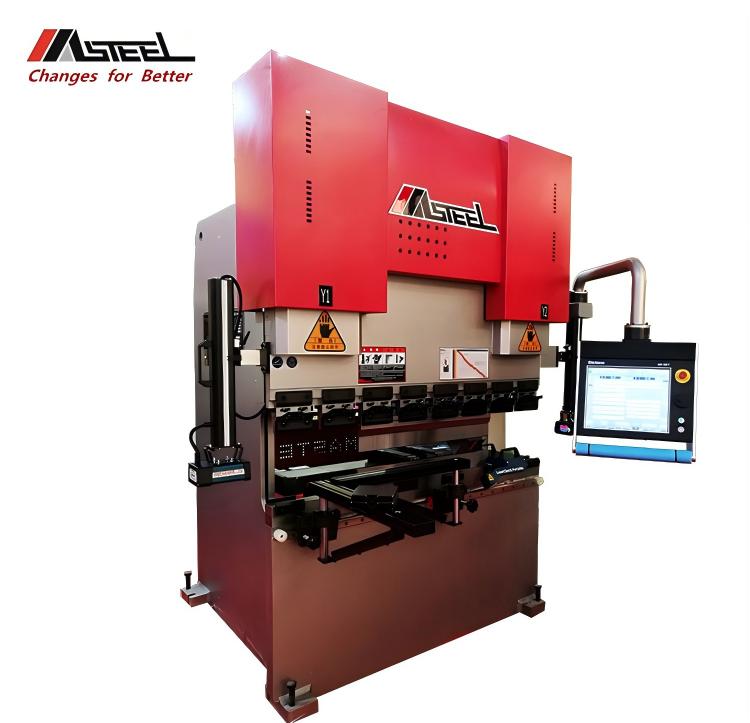
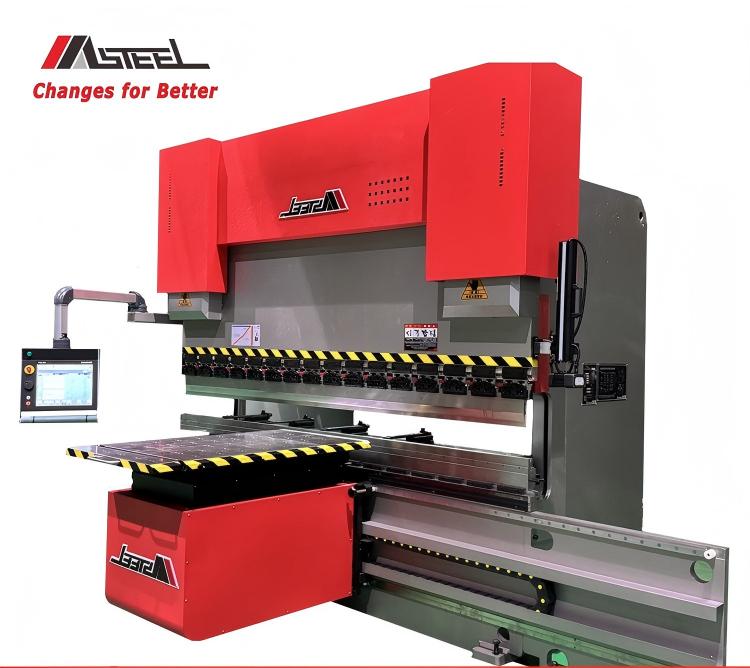
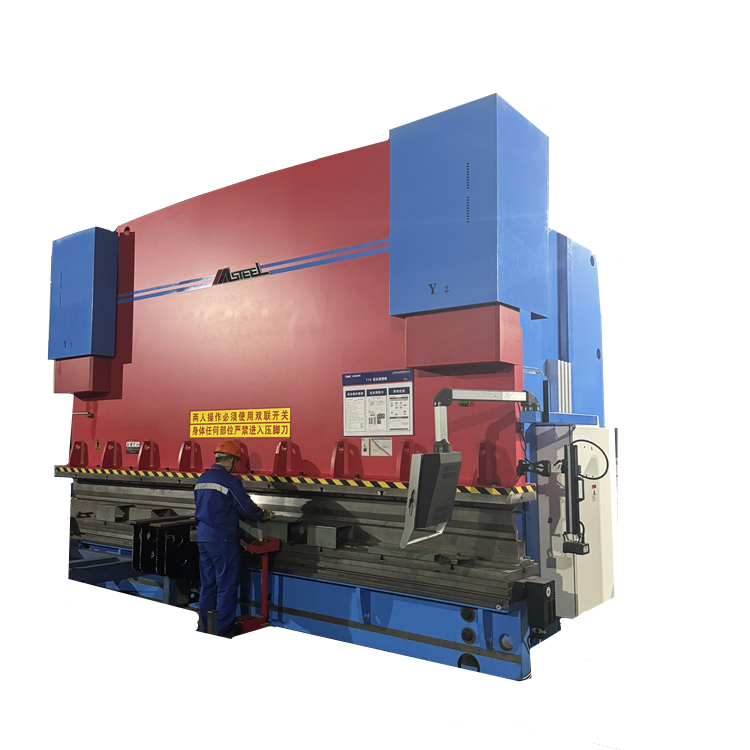
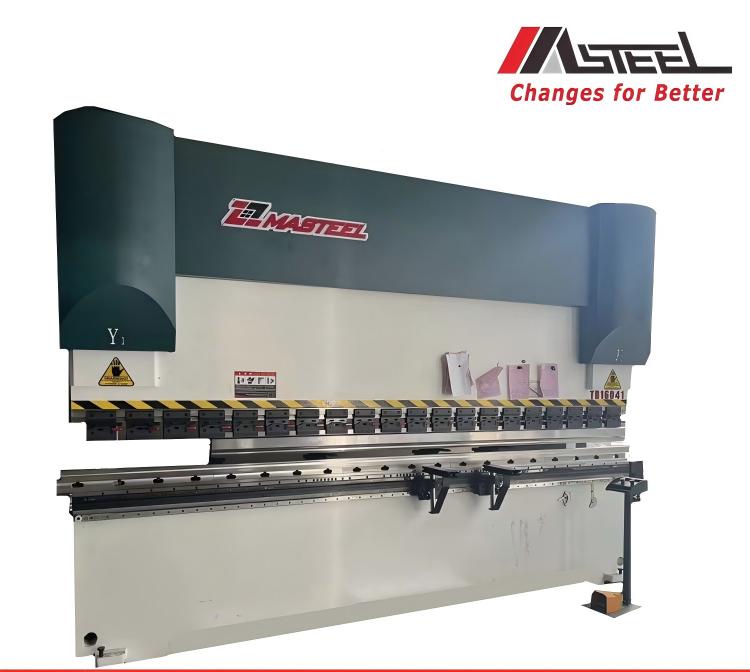
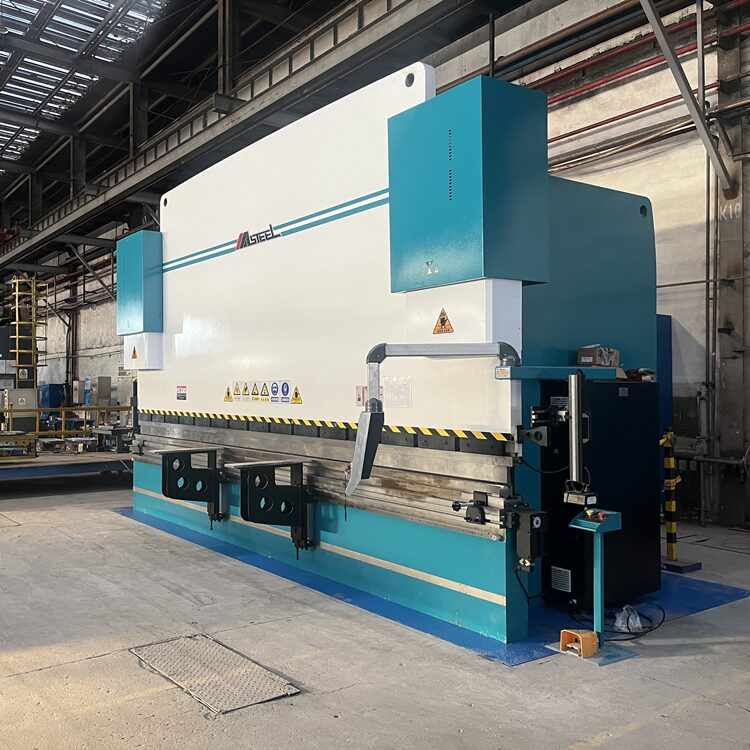
For long parts, tonnage is not just about “can it bend?” It is also about whether the machine can hold angle accuracy along the whole bend. A higher-rigidity electro-hydraulic synchronized press brake is often the safer choice for thick and long workpieces, while hybrid solutions can work very well for lighter but still oversized panels.
4. Crowning or Deflection Compensation
If you are bending long panels, automatic or manual crowning should be treated as a requirement, not an upgrade. This feature compensates for bed deflection and helps keep the bend angle more consistent from left to right.
5. Front Sheet Support
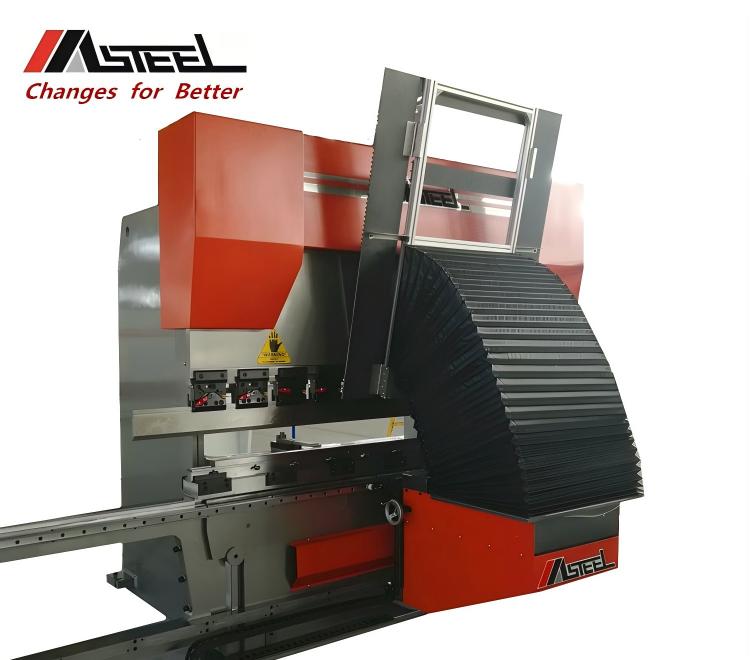
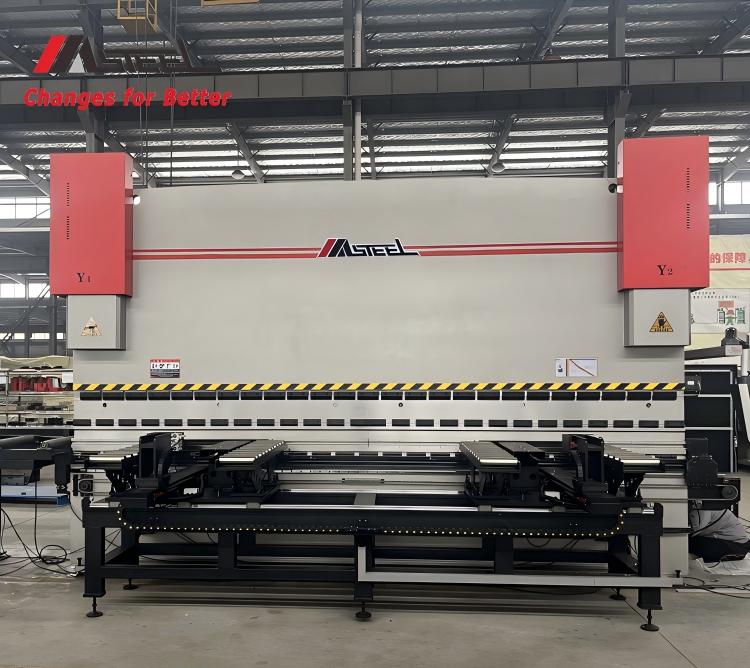
Large sheet metal parts are much easier to control when the machine includes a reliable support system. A servo-following front sheet support helps reduce sagging, improves positioning accuracy, and lowers operator fatigue. This becomes especially valuable for stainless steel panels, cabinet doors, façade panels, and other large-format parts that scratch easily.
6. Tandem or Dual-Machine Synchronization
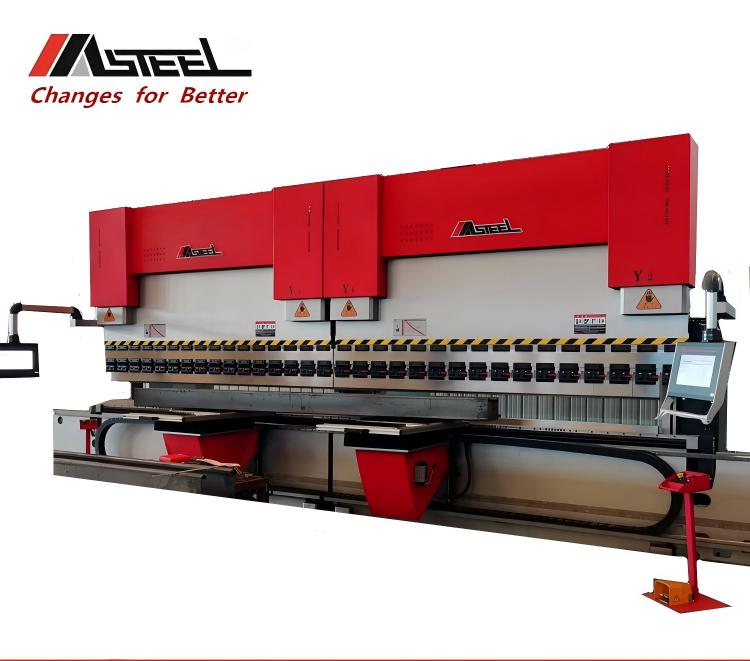
If your workpiece length goes beyond the comfortable range of a single machine, tandem press brake synchronization may be the right direction. A synchronized setup can handle extra-long parts while maintaining shared control across both machines. This is common in projects involving long structural parts, transportation components, and large industrial enclosures.
A Quick Selection Guide by Application
| Application Type | Typical Requirement | What to Prioritize |
|---|---|---|
| Long cabinet panels and electrical enclosure doors | 1 mm to 3 mm sheet, high appearance standard, repeated panel sizes | Backgauge accuracy, sheet support, clean tooling, stable angle consistency |
| Elevator, fire door, and façade panels | Long bends, visible surfaces, scratch control | Crowning, support arms, operator handling efficiency |
| Structural covers and thick industrial parts | 4 mm to 12 mm or more, longer bend length, high force demand | High tonnage, rigid frame, electro-hydraulic synchronization |
| Extra-long special projects | Workpieces beyond standard bed length | Tandem press brake solution, synchronized control, handling support |
How Fangyu Matches Machines for Long and Heavy Jobs
For long and heavy workpieces, Fangyu usually reviews more than one machine parameter at the same time: tonnage, bed length, workpiece weight, bend sequence, and handling method.
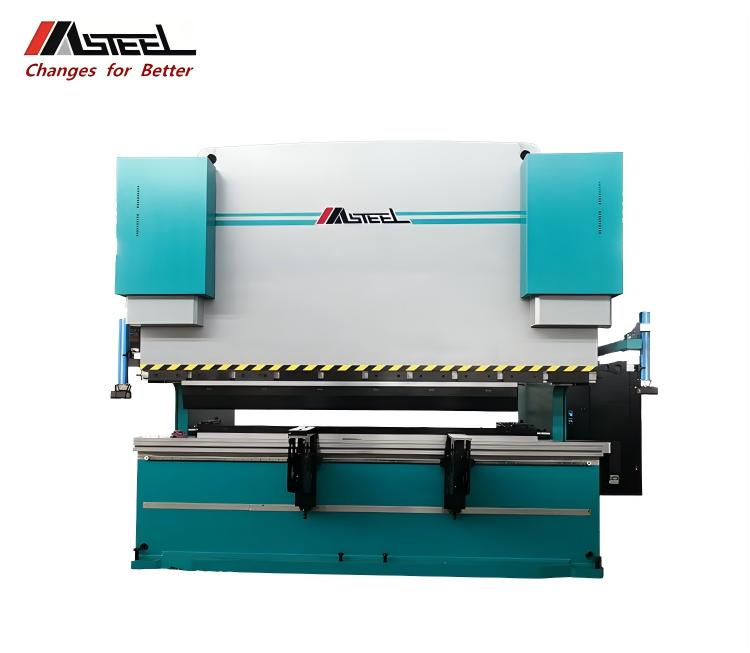
A lighter long-panel application may be well served by an oil-electric hybrid CNC press brake if the main need is stable accuracy on thinner sheets. But when the project moves into long structural parts or heavy plate, buyers usually benefit from an electro-hydraulic synchronized press brake with stronger rigidity and a larger working envelope.
For factories handling oversized panels every day, Fangyu can also match the press brake with front sheet support systems or dual-machine synchronization solutions. That gives the buyer a more complete bending setup instead of a standalone machine that leaves the hardest part of the job to the operator.
What Information Fangyu Needs Before Recommending a Model
To recommend the right press brake for long and heavy workpieces, Fangyu's sales and engineering team usually needs:
- Material type
- Material thickness
- Working size and maximum part dimensions
- Maximum bending length
- Required tonnage, if already calculated
- Drawing or sample part photo
- Destination country
With these details, Fangyu can suggest a suitable model, support configuration, controller option, and export packing plan much faster.
Need a press brake recommendation for long or heavy sheet metal parts?
Please send us the following information: - Material type - Thickness - Working size - Bending length - Tonnage (if known) - Drawing - Destination country
We will review your job and recommend a suitable press brake model, support setup, and export solution.
- Get Quote: https://www.fangyucnc.com/?pages_6/
- Talk to Us on WhatsApp: https://api.whatsapp.com/send?phone=+8615009731608
Related Machines
- Masteel 1200T 8000mm Electro-Hydraulic Synchronized CNC Press Brake
- A heavy-duty option for extra-long bends and high-load structural work.
- Masteel 22032 CNC Press Brake with Dual-Machine Synchronization
- A tandem route for oversized parts that go beyond the comfortable range of a single machine.
- Masteel Servo-Following Front Sheet Support System
- Helps control sagging and operator handling on long visible panels.
- Dalian CIMC 50061 Oil-Electric Hybrid CNC Press Brake
- A practical option for lighter but oversized panel work that still needs stable accuracy.