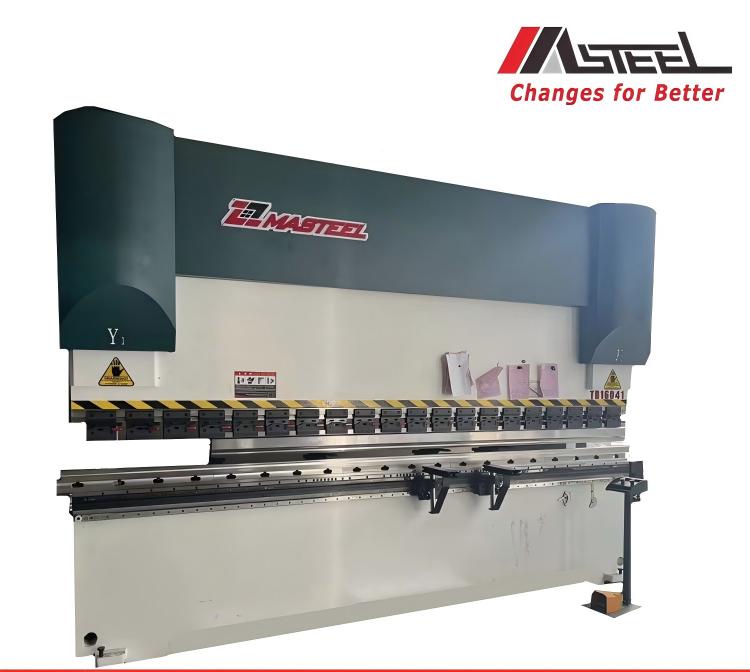
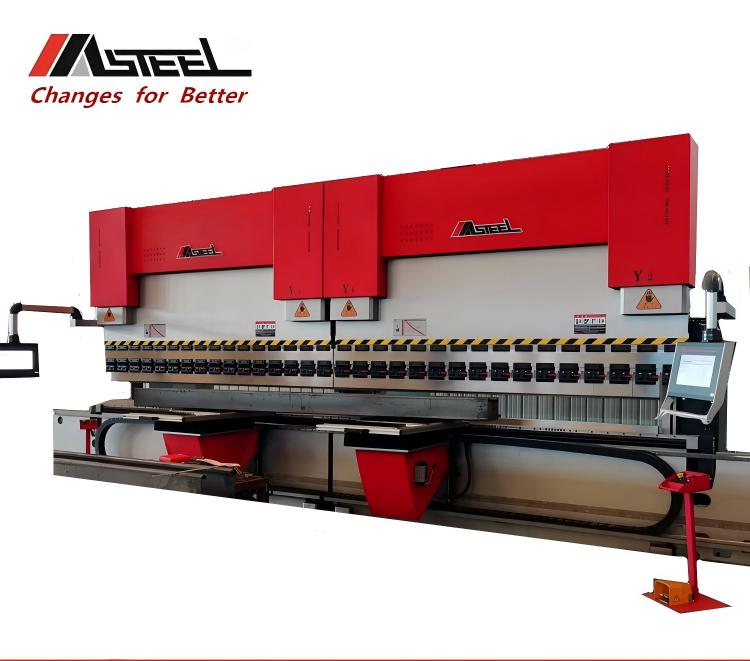
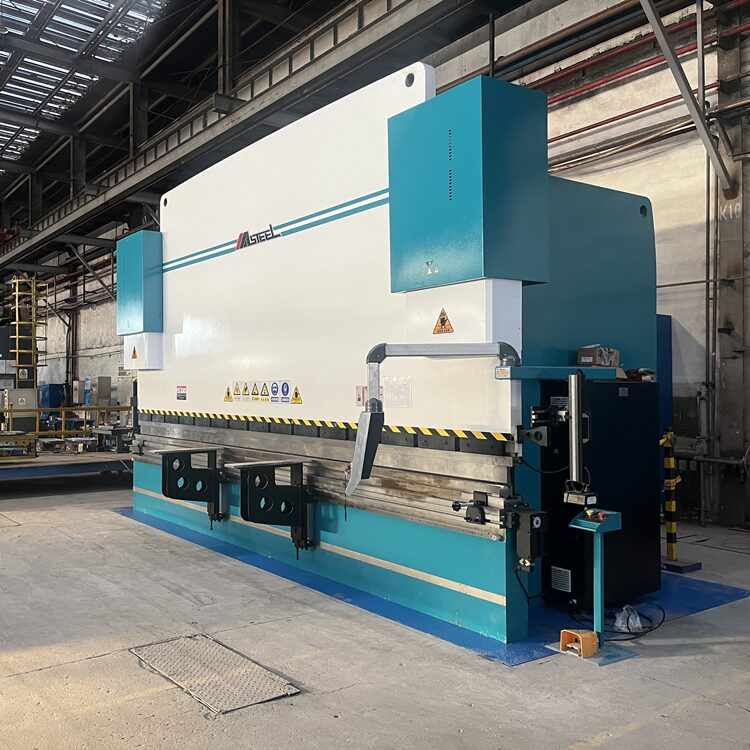
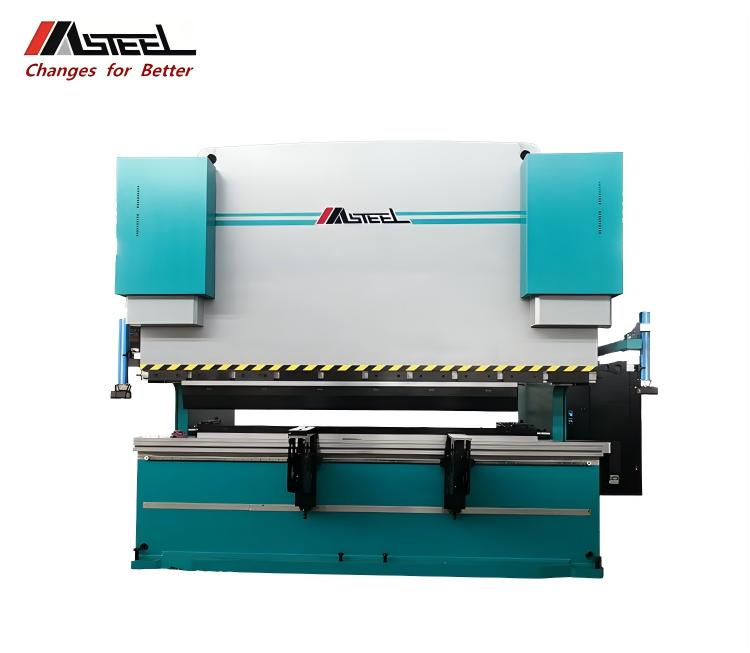
When it comes to getting the best results from any press brake, the tooling you choose is just as important as the machine itself. The right combination of punch and die determines bend angle accuracy, material springback compensation, surface finish quality, and overall tooling lifespan. Whether you are setting up a new bending job or optimizing an existing workflow, understanding press brake tooling fundamentals will save you time, reduce scrap, and improve your bottom line. This guide from FANGYU Machine walks you through everything you need to know about punch and die selection, V-die sizing, tool steel options, and common mistakes that even experienced operators make.
What Is Press Brake Tooling and Why Does It Matter?
Press brake tooling refers to the replaceable components mounted on the machine's upper ram and lower table that physically shape the sheet metal during the bending process. The upper tool, commonly called the punch, pushes the metal into the lower tool, known as the die. Together they form the bend geometry.
Using the wrong tooling setup leads to a cascade of problems: incorrect bend angles, excessive springback, material cracking, surface scratches, and accelerated tool wear. In high-volume production environments, even small per-part inefficiencies compound into significant cost losses over time. Investing in proper press brake tooling selection is one of the fastest ways to improve output quality without upgrading your entire machine park.
Understanding Punch and Die: The Core Components
A punch and die set consists of two complementary forming bodies. The punch is the male shape that descends onto the sheet, while the die is the female channel that supports the material during the bend. The geometry of both parts defines the final bend angle, inside radius, and flange dimensions of the finished piece.
Punches come in a wide variety of profiles:
- Acute punch (90° or less): Used for sharp, tight bends in thin materials.
- Radius punch: Produces a controlled rounded bend, ideal for structural parts requiring some flexibility.
- Gooseneck punch: Features an elevated profile that clears already-bent flanges, essential for multi-angle sequential bending.
- Offset punch: Creates offset bends where the flanges are not parallel, common in box fabrication.
- hemming punch: Used for flattening or closing the edge of a bend to create a safe, smooth edge.
Dies are equally diverse, with the V-opening width being the most critical dimension. The V-die opening — the gap between the two shoulders of the die — directly affects the force required, the inside bend radius produced, and how well the bend recovers from springback.
V-Die Selection Guide: Matching Die Width to Your Material
Choosing the correct V-die opening is one of the most consequential decisions in bending tooling setup. The rule of thumb is that the V-die width should be approximately 6 to 8 times the material thickness for most mild steel applications. Using a die that is too narrow increases tonnage requirements and can crush or scratch the material; using one that is too wide produces an oversized inside radius that may not meet specification.
The following table summarizes recommended V-die opening widths by material thickness for common sheet metal gauges:
| Material Thickness (mm) | Recommended V-Die Opening (mm) | Inside Bend Radius (approx.) | Typical Application |
|---|---|---|---|
| 1.0 – 1.5 | 6 – 8 | 1.0 – 1.5 | Thin panel brackets, enclosure panels |
| 2.0 – 3.0 | 12 – 16 | 2.0 – 3.0 | Structural supports, medium frames |
| 4.0 – 5.0 | 25 – 35 | 4.0 – 5.5 | Heavy structural members, chassis parts |
| 6.0 – 8.0 | 40 – 50 | 6.0 – 8.0 | Heavy equipment components, load-bearing parts |
| 10.0 – 12.0 | 60 – 80 | 10.0 – 13.0 | Industrial machinery, construction plate |
For stainless steel, increase the V-die opening by roughly 20–30% compared to mild steel to account for its greater strength and springback tendency. For aluminum, you can often use a slightly narrower die than the 6–8× rule since aluminum is more malleable and springs back less.
Tool Steel Types: Which Material Is Right for Your Work?
Not all tool steel is created equal. The steel grade used in your punch and die directly affects wear resistance, edge retention, toughness, and cost. Here are the most common options:
- D2 (Cold Work Steel): High carbon, high chromium tool steel with excellent wear resistance. Ideal for high-volume production on mild steel and stainless steel. Holds a sharp edge well but can be brittle under heavy shock loads.
- A2 (Air-Hardening Steel): Good toughness and wear resistance balance. Less prone to cracking than D2 during heavy usage. A popular choice for general-purpose sheet metal tooling.
- H13 (Hot Work Steel): Excellent thermal resistance and toughness. Often used in press brake tooling for thick plate bending where heat generated during high-force operations can degrade lesser steels.
- Tungsten Carbide Dies: Extremely hard and wear-resistant, used for the most demanding high-volume production runs. Higher upfront cost but dramatically longer tool life in the right applications.
- 42CrMo (Chrome-Molybdenum Steel): A cost-effective option for lower-volume applications. Good machinability and decent toughness, widely used in Chinese and Asian-manufactured press brake tooling.
When evaluating cost per part rather than cost per tool, premium tool steels often deliver a lower total cost of ownership through extended service intervals and consistent quality over thousands of cycles.
Press Brake Tooling Setup: Best Practices and Common Mistakes
Even with quality tooling, improper setup undermines performance. Here are the critical checks every operator should perform before starting a bending run:
- Verify die seating: The die must sit flat and fully seated in its clamp. A loose die can shift during bending, creating out-of-tolerance parts and potential safety hazards.
- Set correct blade clearance: The gap between punch and die shoulders must be appropriate for the material type and thickness. Refer to the material-specific charts for the correct clearance, generally 5–10% of material thickness for mild steel.
- Check punch-die alignment: The punch must enter the die symmetrically. Misalignment causes asymmetric bend angles, one-sided wear, and accelerated tool failure.
- Inspect for tool damage: Even small nicks or rounded edges on the punch nose will reproduce on every part. Inspect tooling before each shift under good lighting.
- Account for material direction: When bending materials with pronounced grain structure like certain aluminum or stainless grades, bending across the grain produces a smoother radius without risk of cracking at the bend line.
Frequently Asked Questions About Press Brake Tooling
What is the difference between a precision press brake tool and a standard tool?
Precision tooling is manufactured to tighter dimensional tolerances — typically ±0.01 mm on critical dimensions — and uses higher-grade tool steels. This results in more consistent bend angles across production runs and longer intervals between re-sharpening. Standard tooling is adequate for prototype work or low-volume jobs where the absolute lowest per-piece cost matters less than repeatability.
How often should press brake tooling be replaced?
There is no fixed schedule — it depends on production volume, material hardness, and the quality of the original tooling. Inspect punches and dies visually at regular intervals. Replace when you see visible wear such as rounding of the nose radius, surface galling, or dimensional drift in finished parts that exceeds your tolerance requirements.
Can I mix different brands of punch and die in the same setup?
Technically yes, but it is not recommended. Different manufacturers use slightly different shoulder geometries, clamping systems, and dimensional standards. Mixing brands can cause inconsistent seating, alignment issues, and unpredictable bend results. For best consistency, use matched sets from a single manufacturer for each specific bending application.
What is springback and how does tooling affect it?
Springback is the natural tendency of sheet metal to elastically recover some of the bend after the punch is released, resulting in a slightly larger final angle than programmed. The amount of springback depends on the material's yield strength, thickness, and the V-die opening used. Tighter V-die openings produce more acute inside radii, which generally exhibit more springback. Modern CNC press brakes with angle-computation software can auto-compensate when the correct material properties are entered.
How do I choose between segmented and solid tooling?
Segmented press brake tools consist of multiple short sections that can be combined to create complex bend sequences without moving individual pieces. They are faster for multi-angle jobs and reduce tool changeover time. Solid one-piece tools are simpler, more rigid, and less prone to setup error for single-angle repetitive bending. Choose segmented for complex part families and solid for high-volume single-application runs.
Conclusion: Invest in the Right Press Brake Tooling for Your Bottom Line
Selecting the right press brake tooling — the correct punch and die combination, appropriate V-die opening, and the best tool steel for your application — is foundational to achieving consistent, high-quality bending results. The difference between well-chosen and poorly-chosen tooling compounds across every part you produce.
At FANGYU Machine, our team of applications engineers can help you select the optimal bending tooling configuration for your specific materials, production volumes, and quality requirements. We supply a full range of press brake tooling including acute punches, gooseneck profiles, V-dies in all standard sizes, and premium tool steel options for demanding applications. Contact our technical sales team at FANGYU Machine to discuss your next tooling order or to request a free bending trial on your part sample.