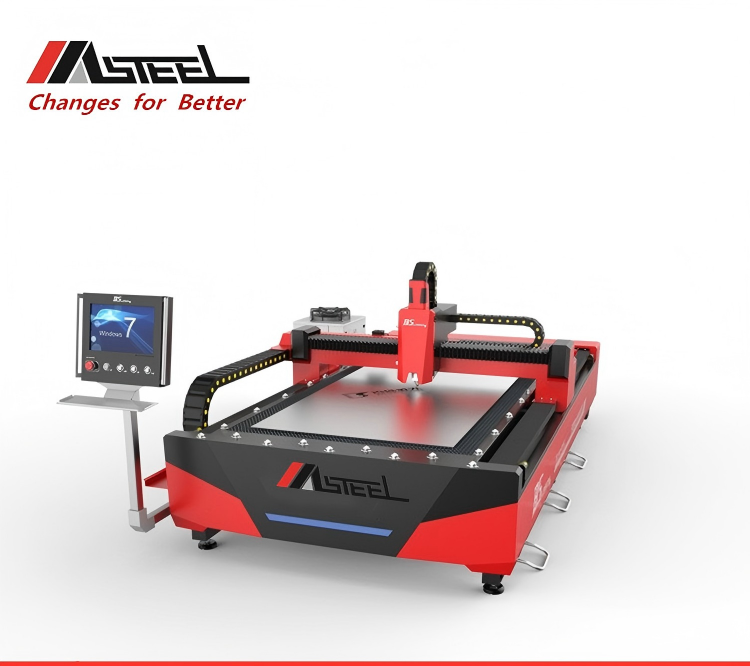
When buyers evaluate a CNC laser cutting machine for their factory, one of the first questions they ask is: what can this machine actually cut? The answer depends on the laser source type, power rating, assist gas setup, and the machine's overall configuration. Getting this wrong can mean ordering a machine that handles your most common jobs poorly — or paying for capabilities you'll never use.
This article breaks down the materials a fiber laser cutting machine can process, how the cutting capability varies by laser power and material type, and what information to share with a supplier when requesting a recommendation.
Why Material Compatibility Matters More Than Machine Speed
A machine's maximum cutting speed is a headline number. What actually matters for your production is whether it can reliably cut your specific materials at the thicknesses your parts require — consistently, cleanly, and at the tolerances your customers expect.
Laser cutting is not a one-size-fits-all process. A machine that cuts 6mm carbon steel cleanly at full speed may struggle with 3mm stainless steel if the gas pressure or focal length settings are wrong. Understanding which materials your target machine handles well — and at what thickness range — is the single most practical piece of information you can have before requesting a quote.
Fiber Laser Cutting Machine: What It Can Cut
Fiber laser cutting machines are the dominant type in modern sheet metal fabrication. They use a solid-state laser source that is more efficient, requires less maintenance, and produces better cut quality on reflective metals compared to older CO2 laser systems.
Carbon Steel (Mild Steel)
Carbon steel is the most common material cut on fiber laser machines. Most Fangyu fiber laser systems handle carbon steel from 0.5mm thin sheet up to 25mm thick plate, with cutting speed decreasing as thickness increases.
- Thin sheet (0.5–3mm): High-speed cutting, narrow kerf, minimal heat-affected zone (HAZ)
- Medium thickness (4–10mm): Standard cutting speed with oxygen assist gas; clean edges achievable
- Thick plate (12–25mm): Slower cutting speeds, may require multi-pass or higher-power units (12kW+ recommended for 20mm+)
For production environments cutting high volumes of 2–6mm carbon steel parts — brackets, structural components, automotive panels — a 6–12kW fiber laser delivers the best speed-to-cost ratio.
Stainless Steel
Stainless steel is widely used in food processing, medical equipment, architectural applications, and kitchenware. Fiber laser cutting produces clean, oxide-free edges on stainless steel when nitrogen is used as the assist gas, eliminating the discoloration and scale associated with oxygen cutting.
Typical cutting range on Fangyu fiber lasers: - 0.5–6mm: Standard cutting with nitrogen assist; excellent edge quality, no secondary finishing needed - 8–12mm: Feasible with higher power (15kW+); quality and speed trade-offs increase beyond 10mm - Above 12mm: Limited practical use on fiber lasers under 20kW; plasma or waterjet may be more economical
Stainless steel's reflectivity used to be a problem for laser sources. Modern fiber lasers handle it reliably up to moderate thicknesses, making them the preferred choice over CO2 lasers for stainless steel fabrication.
Aluminum
Aluminum is increasingly common in EV components, aerospace brackets, lighting fixtures, and general sheet metal work. Cutting aluminum with a fiber laser requires higher power settings and nitrogen assist gas to prevent the material from oxidizing during cutting.
Key considerations: - Aluminum reflectivity: Like stainless steel, aluminum reflects fiber laser wavelengths less than CO2 lasers — but higher power is still needed compared to cutting steel of equivalent thickness - 0.5–6mm: Clean cuts achievable with 6kW+ machines - 6–10mm: Possible with 12kW+ machines; edge quality may degrade - Dross control: Aluminum dross (molten material resolidifying on the bottom edge) is a common quality issue. Proper assist gas pressure tuning is critical
For buyers sourcing machines primarily for aluminum parts, mentioning this explicitly to your supplier is important — some machine configurations are optimized for steel and may require different optics or gas settings for aluminum.
Galvanized Steel
Galvanized steel — sheet steel coated with a zinc layer for corrosion resistance — is widely used in automotive, construction, and HVAC applications. Fiber laser cutting of galvanized steel works well in thin-to-medium thicknesses.
The zinc coating burns off during cutting, so the cut edge exposes the underlying steel. For applications where corrosion resistance at the cut edge matters, post-cut treatment or sealants may be needed.
Thickness range: effectively cut from 0.5mm up to approximately 6–8mm, depending on the zinc coating weight and machine power.
Brass and Copper
Brass and copper are the most challenging common metals for fiber laser cutting due to their high reflectivity and thermal conductivity. Standard fiber laser systems can cut thin brass and copper (up to approximately 3mm), but beyond that, cutting quality drops significantly and some machines may not cut at all without specialized configuration.
For buyers whose production includes brass or copper components: - Low-power machines (<6kW): Limited to very thin material (≤1.5mm) - High-power machines (15kW+): Better performance on brass/copper up to 3–4mm; still not ideal compared to waterjet or plasma for thicker cuts - Alternative processes: For thick copper or brass (5mm+), consider waterjet or specialized laser configurations with modified beam delivery systems
If you work extensively with brass or copper, tell your supplier upfront. Some fiber laser configurations are tuned for these materials; others are not.
Titanium (Specialty)
Titanium is used in aerospace, medical implants, and high-performance automotive applications. Fiber lasers can cut titanium effectively in thin-to-medium gauges, and the process produces clean edges with minimal HAZ when properly configured.
Most standard sheet metal fabrication buyers do not work with titanium. If your parts involve titanium, mention this specifically — the machine configuration, gas supply, and power requirements differ from standard carbon steel setups.
What a Fiber Laser Cannot Cut Effectively
No laser machine is a universal cutter. The following materials present challenges that make alternative processes more practical:
- Cast iron — High carbon content causes irregular cutting behavior and poor edge quality on fiber lasers
- Hardened tool steels (above 50 HRC) — The hardness that makes these materials useful also makes them difficult to cut with lasers; EDM or grinding is preferred
- Laminated or coated thick glass — Thermal stress causes cracking; waterjet is the standard process
- Most plastics — Acrylic and some plastics can be laser-cut, but many produce toxic fumes; fiber lasers used for metalworking are not configured for this
- Concrete, stone, ceramics — These materials require specialized laser systems outside the scope of standard sheet metal fabrication equipment
How Laser Power Affects What You Can Cut
The practical cutting capability of a fiber laser machine scales roughly with its power rating. Below is a general reference for what a well-configured Fangyu fiber laser can handle reliably:
| Laser Power | Carbon Steel (max) | Stainless Steel (max) | Aluminum (max) | Best Use Case |
|---|---|---|---|---|
| 1–3kW | 6mm | 3mm | 2mm | Prototype shops, thin-sheet production |
| 6kW | 12mm | 6mm | 4mm | General sheet metal fabrication |
| 12kW | 20mm | 10mm | 6mm | High-volume production, thicker plate |
| 15–30kW | 25mm+ | 12–16mm | 8–10mm | Heavy plate, large-format cutting |
These are practical maximums under ideal conditions. Actual performance depends on material grade, surface condition, assist gas quality, and machine calibration.
How to Use This When Requesting a Quote
When you contact Fangyu about a fiber laser cutting machine for your factory, share the following to get the most accurate recommendation:
- Primary material(s) you will cut most often (carbon steel, stainless steel, aluminum, galvanized, or mixed)
- Maximum thickness you need to cut reliably (not just what you hope to cut occasionally)
- Typical part size — working area requirements (most Fangyu machines range from 1300×2500mm to 3000×8000mm)
- Production volume — pieces per shift or per month, to assess duty cycle requirements
- Desired laser power — or let us recommend based on your material mix
- Destination country — affects electrical specs, certification requirements, and shipping logistics
How Fangyu Configures Laser Machines for Different Materials
Fangyu supplies fiber laser cutting machines ranging from 1kW to 30kW across multiple bed size configurations. Our applications team reviews each inquiry against the buyer's material and thickness requirements and configures the machine's laser source, cooling system, assist gas delivery, and control software accordingly.
For mixed-material shops — for example, a shop that runs primarily carbon steel with occasional stainless steel and aluminum — we can configure a machine with upgraded power and multi-gas capability to handle the range without underperforming on the most common jobs.
CTA
Not sure which laser power or configuration matches your material mix? Send us your most common materials, thicknesses, and part sizes — our engineers will recommend the right machine setup.
Before requesting a quotation, please share:
- Material type(s) you cut most often (carbon steel, stainless steel, aluminum, galvanized, other)
- Material thickness range (minimum and maximum)
- Working size — maximum part dimensions your machine needs to handle (length × width)
- Drawing or sample description — even a brief list of key parts helps us understand your production scope
- Destination country and nearest port
- Production volume — estimated pieces per shift or monthly output (helps us assess duty cycle requirements)
With these details, our team can recommend the optimal fiber laser configuration and power rating for your specific production profile.
- Get a Quote Now(https://fangyucnc.com/?pages_6/)
- Talk to Us on WhatsApp(https://api.whatsapp.com/send?phone=+8615009731608)
Related Machines
- Fiber Laser Cutting Machine
- The main Fangyu route for cutting carbon steel, stainless steel, aluminum, and other common sheet metal materials.
- CO2 Laser Cutting Machine
- A useful comparison path for buyers evaluating legacy CO2 cutting versus newer fiber laser setups.
- Laser Plate Cutting Machine
- A broader large-format option for factories that cut thicker materials or bigger sheets at production scale.